Journal
What Does Halal Mean When You Order Food in the Fraser Valley?
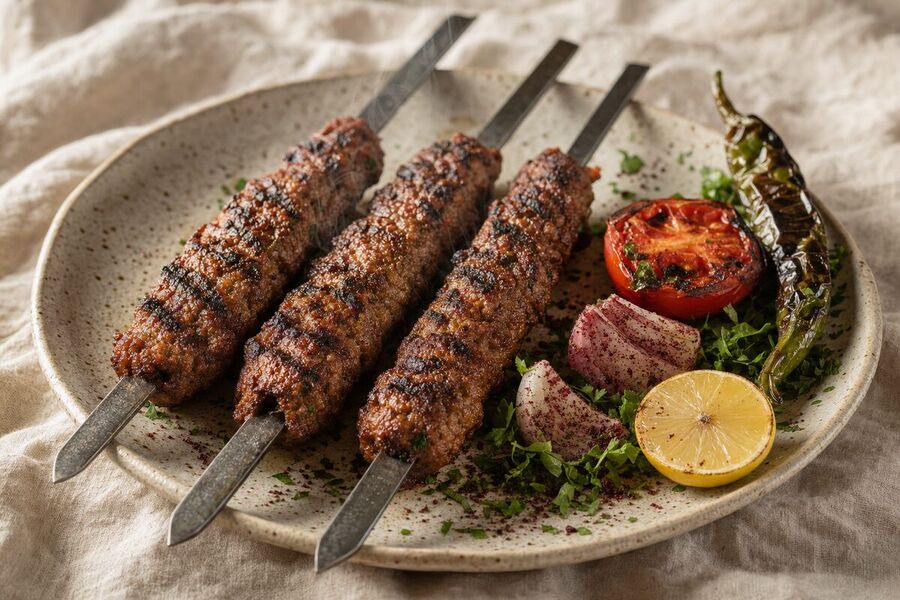
Halal means permitted under Islamic law, and for food it covers both the ingredients and how the meat was slaughtered. In Canada, any product labelled or advertised as halal must name the body that certified it. So when you order in the Fraser Valley, the reliable move is to ask the kitchen directly.
This guide explains what the word actually covers, what a certification proves and does not prove, and the short list of questions worth asking before you order for yourself or for a room full of guests.
What does halal actually mean?
Halal is an Arabic word meaning permitted. Applied to food, it is not a single box to tick. It covers the ingredients, where pork and alcohol are excluded, and it covers the slaughter, which has its own requirements about how the animal is handled and by whom.
That second half is the part people miss. A kitchen can be entirely free of pork, cook only beef and chicken, and still not be able to call its meat halal, because the question of how the animal was slaughtered is answered by the supplier, not the cook. The two things get spoken about as one and they are not.
Halal is also not a niche concern in Canada any more. Statistics Canada counted 1,775,715 Muslims in the 2021 Census, about 4.9% of the population, a share that more than doubled from 2.0% in 2001. When a Fraser Valley host plans a wedding, a work lunch or a family dinner, there is a good chance someone at the table is asking this question.
How do you know if food is halal in Canada?
By the name attached to the claim. The Canadian Food Inspection Agency is unusually specific here: under Canada’s food labelling rules, a halal claim on a label, package or advertisement must be accompanied by the name of the person or body that certified the food as halal. The complete name, not a logo or an acronym floating on its own.
The reason for that rule is worth understanding. There is no single national halal authority in Canada the way there is one federal meat inspection system. Several certifying bodies operate, and their standards are not identical, particularly on questions like stunning before slaughter. Naming the certifier lets you decide whether that particular standard matches what you or your guests observe. A bare word gives you nothing to check.
That rule is written for labelled and advertised products rather than for a handwritten sign in a window, which is exactly why a phone call does more work than a storefront sticker.
Is the food at Salma’s Kitchen halal?
Here is the honest answer, and we would rather give you a useful one than a comfortable one. There is no pork anywhere on our menu. Every meat dish we cook, from kabab to shish tawook to sujuk to kibbe, is beef or chicken, and a large part of the menu is vegetarian before you get to the meat at all.
What we will not do is print a blanket halal claim on a website. Sourcing is a supply question, suppliers change, and a claim we cannot verify for every order is worse than no claim. If halal status matters for your meal or your event, call us and ask about your specific order. We will tell you exactly what we can confirm at that time, and where we cannot confirm what you need, we will say so plainly. That is how we would want to be treated.
For dietary planning around a larger catered event, our guide to halal, vegetarian and gluten-aware catering walks through the same ground with guest counts in mind.
Halal, pork-free and vegetarian: what does each one guarantee?
These three get used interchangeably in casual conversation and they promise very different things. This is the difference in plain terms.
| What you are told | What it guarantees | What it does not tell you |
|---|---|---|
| Certified halal, certifier named | The named body inspected and approved the meat against its published standard | Whether that body’s standard matches your own practice, or whether equipment is shared |
| ”Halal” with no certifier named | Very little on its own | Who verified it, when, and against what standard |
| No pork on the menu | No pork products are cooked or served | Nothing about how the beef or chicken was slaughtered |
| Vegetarian dish | No meat of any kind is in the dish | Whether alcohol, animal rennet or shared equipment are involved |
| Vegan dish | No animal products in the dish at all | Whether it was prepared on shared surfaces |
Read down that middle column and the pattern is clear. Each label answers one question and stays silent on the others. The gap between them is where misunderstandings happen, usually at somebody’s event, usually too late.
What should you ask before you order?
Ask short, specific questions. Vague ones get vague answers, and most kitchens genuinely want to give you a straight response if you make it easy to.
- Is the meat certified halal, and who certified it? The name matters more than the word, for the reason CFIA wrote into the rules.
- Is there any pork in the kitchen at all? For many guests this is the first threshold, and it is a fast yes or no.
- Are grills, fryers or utensils shared between dishes? Cross contact matters to some observant guests and not to others. You get to decide, but only if you know.
- Can you confirm this for my order, on my date? Supply changes. A general answer about last year is not an answer about your wedding.
- What are my options if you cannot confirm? In most Middle Eastern kitchens the answer is a genuinely generous vegetarian spread, not a sad substitute plate.
If a kitchen answers all five without hedging, including the inconvenient parts, you have learned something real about how they operate.
Where do people look for halal food in the Fraser Valley?
Most people use a map search and then confirm by phone, and the phone call is the part that actually settles it. Online listings go stale, ownership changes, and a review from two years ago is not evidence about this month’s supplier.
Practical places people start in Abbotsford, Mission, Langley, Chilliwack and Surrey: grocery stores with a dedicated halal meat counter, community networks and mosques, and word of mouth from neighbours who order regularly. For restaurants, the search term people type is usually simply “halal near me”, which returns a mix of certified kitchens, pork-free kitchens and listings that have not been updated in years. That mix is the whole problem, and one phone call sorts it.
One more thing worth knowing about the food itself. A Middle Eastern spread handles this question more gracefully than most cuisines, because so much of the table is plant based to begin with. Dips, salads, rice and grilled vegetables are not the accommodation, they are the centre of the meal. Our guide to what mezze is and how to order it explains how that spread is built.
Whatever you decide, decide it with real information. If the question is for a gathering, the catering side of what we do explains how we plan a table around what people can and cannot eat. Look through the menu, then call us at (819) 743-5953 and ask your questions directly. We will answer them straight, including the answers that cost us the order.
Frequently asked questions
What does halal mean?
Halal is an Arabic word meaning permitted under Islamic law. Applied to food it covers two things at once: the ingredients, with pork and alcohol excluded, and the way an animal was raised and slaughtered. A dish can be free of pork and still not be halal, because the slaughter method is a separate question from the ingredient list.
Is Salma's Kitchen halal?
We will not print a blanket claim we cannot stand behind. What we can say plainly is that there is no pork anywhere on our menu: every meat dish is beef or chicken, and much of the menu is vegetarian. If halal matters to you, call us and ask about your specific order and we will tell you exactly what we can and cannot confirm.
Does a restaurant need a certificate to say its food is halal in Canada?
For labelled and advertised food, close to it. The Canadian Food Inspection Agency requires that any halal claim on a food label, package or advertisement is accompanied by the name of the person or body that certified the food as halal. That rule is why you should treat a bare halal sign with more curiosity than a named certification.
Is halal the same as vegetarian?
No. Vegetarian food contains no meat at all, which sidesteps the slaughter question, but vegetarian dishes can still involve ingredients some guests avoid, such as alcohol in a sauce or animal rennet in a cheese. Many people who keep halal order vegetarian when they cannot confirm the meat, which is a practical workaround rather than an equivalence.
What should I ask a restaurant about halal before I order?
Ask three questions: is the meat certified halal and by whom, is there pork anywhere in the kitchen, and are grills or fryers shared between dishes. A kitchen that answers all three plainly, including the parts that are inconvenient, is giving you the information you need to make your own decision.
Where do people find halal food in the Fraser Valley?
Most people combine a map search with a phone call, because listings go stale and suppliers change. Grocery aisles in Abbotsford, Surrey and Langley carry certified halal meat, and community networks and mosques are often the most current source. Whatever a listing says, confirm with the kitchen before an event you cannot redo.
Salma’s Kitchen cooks Armenian and Middle Eastern food in Abbotsford, BC. See the menu, our catering service areas, or how to order. Phone only: (819) 743-5953.