Journal
Will Kids Eat Middle Eastern Food?
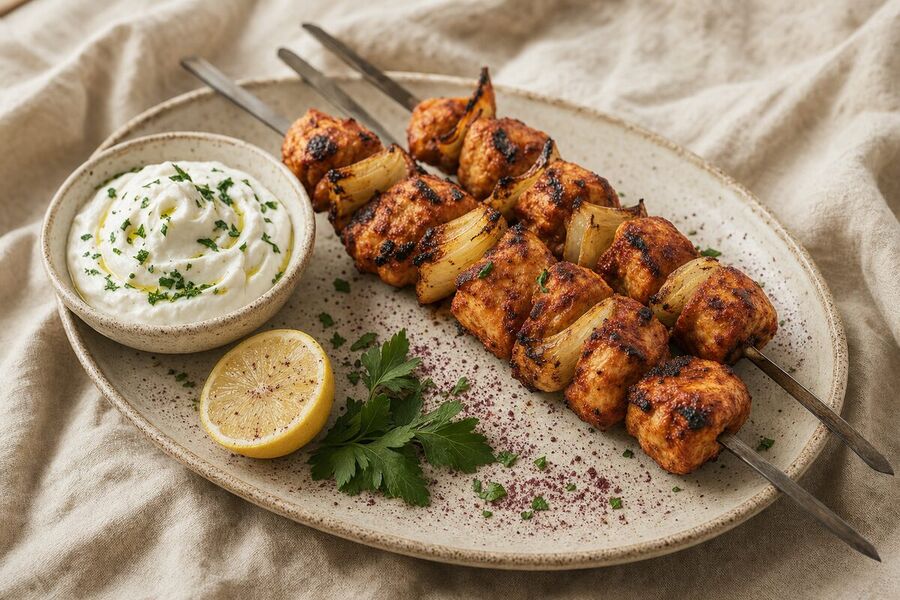
Usually yes, and more easily than parents expect. Most of a Middle Eastern table is plain grilled meat, rice, warm bread and dips kept in separate bowls, so nothing is hidden inside a sauce. Canada’s food guide notes children are more likely to accept a new food the more often they are offered it.
This guide covers why the format suits picky eaters, which dishes children reach for first, how spicy the food actually is, and how to introduce it at a table without turning dinner into a negotiation.
Why does Middle Eastern food suit picky eaters?
Because of how it arrives, not because of what is in it. A picky eater usually refuses a plate for one of two reasons: they cannot see what is in it, or the components are touching. A mezze table solves both by accident.
The food comes deconstructed. Meat is on a skewer. Rice is in its own dish. The salad is chopped vegetables you can identify by sight. The dips sit in separate bowls and are scooped, not poured. Bread is bread. There is no casserole, no gravy, no single sauced dish that has to be accepted or rejected whole. A child can build a plate of only the things they already trust and still be eating the same meal as everyone else.
The second thing that helps is that the entry point is familiar. Grilled chicken and warm flatbread are not exotic to a Canadian eight year old. They are chicken and bread. The unfamiliar items sit on the same table, within reach, without being on the plate. Our guide to what mezze is and how to order it explains how that spread is put together.
Canada’s food guide describes exactly this arrangement when it discusses serving meals family style, noting that letting everyone select what and how much they want may encourage kids to try new foods they would otherwise have pushed aside. That is a fair description of every Middle Eastern dinner table ever set.
Which dishes do children usually try first?
The grilled meats and the bread, then rice, then a dip, roughly in that order. The table below is about the cuisine generally and about what tends to happen at a family table, not a promise about any particular child.
| Dish | Why it usually lands | Heat level | If you have never had it |
|---|---|---|---|
| Grilled chicken skewers | It is chicken, and it looks like chicken | Mild and aromatic | Marinated, then charcoal grilled |
| Warm flatbread | Familiar, and it is a tool as much as a food | None | Soft, warm, torn not sliced |
| Rice | Plain, recognisable, filling | Mild | Often cooked with butter or oil and spice |
| Hummus | Smooth, mild, dippable with bread | None | Chickpeas, tahini, lemon, garlic |
| Beef kabab | Seasoned grilled beef, a familiar flavour | Mild to warm | More generously spiced than the chicken |
| Cucumber and tomato salad | Raw vegetables they can pick out | None | Lemon and olive oil dressing |
| Baba ganoush | The smoky one, a bigger jump | None | Roasted eggplant and tahini |
| Muhammara | Sweet and hot at once, for the adventurous | Some chili | Roasted red pepper, traditionally walnuts |
If you want the differences between the dips before you order, we compared hummus, baba ganoush and muhammara side by side.
Is Middle Eastern food spicy?
Aromatic, not hot, as a general rule. This is the single biggest misconception parents bring to the cuisine, and it costs a lot of children a meal they would have enjoyed.
The spice cabinet that defines Middle Eastern and Armenian cooking is cumin, coriander, allspice, cinnamon, sumac, paprika, mint and parsley. Those are warm and fragrant. Sumac is tart, closer to lemon than to pepper. Cinnamon and allspice in a meat dish read as savoury depth to an adult and as “not spicy” to a child, which is what matters here.
Chili does exist in the cuisine and it is concentrated in specific places rather than spread across everything. Muhammara carries a gentle chili warmth alongside its sweetness, as we describe in what muhammara is, and some cured sausages are properly hot. Those are identifiable dishes you can simply order or not order. The rest of the table is not competing for your attention with heat.
If heat is a hard limit at your table, ask about the dish you are considering rather than the cuisine. A kitchen can tell you which items carry chili.
How do you introduce it without a battle?
By separating the offering from the outcome, which is the approach Canada’s food guide takes with picky eating generally.
Its guidance for parents and children is direct on two points. First: some children hesitate to try new foods, children are more likely to accept a new food the more often they are exposed to it, and an unfamiliar food can be offered again later if it is rejected the first time. Second: try not to focus on how much your kids are eating, and let your kids decide how much they eat.
That translates into five practical moves at a Middle Eastern table:
- Put everything in the middle. Do not build the child’s plate for them. Access without pressure is the entire mechanism.
- Anchor with something known. Bread and grilled chicken first, so there is a guaranteed safe option and nobody is negotiating from hunger.
- Give the dips a job. A dip is more interesting to a child as something to dunk bread into than as a food in its own right.
- Let refusal be quiet. One rejection is not a verdict. Order it again in a month.
- Let them help. The food guide notes that involving kids in planning and preparing meals can encourage picky eaters to try foods they helped prepare and is a way to share culture and family traditions. Letting a child carry the bread to the table counts.
We are a kitchen, not a health service. If you are worried about your child’s eating or growth, that is a conversation for your doctor or a registered dietitian, not for a restaurant blog.
How much do you order when children are eating?
Less than you would for the same number of adults, and weighted differently. Children graze at a shared table rather than clearing a plate, and they gravitate to bread, rice and plain grilled meat.
A workable rule when you are planning a family gathering is to count young children as roughly half an adult portion, then add extra bread and rice rather than extra dishes, because those are what actually get eaten. Our guide to how much Middle Eastern food to order per person sets out the adult quantities to work from, and birthday party catering in the Fraser Valley covers mixed-age gatherings specifically.
What if your child has an allergy?
Say so first, before anything else in the conversation, and say how serious it is. Sesame is in tahini and therefore in hummus, tree nuts appear in some dips and most pastries, and dairy runs through yogurt sauces and desserts. All three are Health Canada priority allergens.
Cross-contact in a shared kitchen is a real risk, and no small kitchen can rule it out by good intentions. If your child has a serious allergy, speak to the kitchen directly about your specific order. Our guides to allergens in Middle Eastern food and to which Middle Eastern dishes are gluten free go through where each one turns up.
Salma’s Kitchen cooks Armenian and Middle Eastern food in Abbotsford. For a birthday or a family party rather than a weeknight, our catering service travels across the valley. Have a look at the menu, then call (819) 743-5953, tell us who is eating and how old they are, and we will tell you honestly which dishes tend to work for children and what is in them.
Frequently asked questions
Will picky eaters eat Middle Eastern food?
More often than parents expect, because the food arrives deconstructed. Plain grilled meat, rice, warm bread and dips in separate bowls mean a child can see every component and take only the ones they recognise. Nothing is hidden inside a sauce, which removes the usual reason a picky eater refuses a plate outright.
Is Middle Eastern food spicy for kids?
As a rule it is aromatic rather than hot. The dominant spices across the cuisine are cumin, coriander, allspice, cinnamon, sumac and paprika, which are warm and fragrant instead of burning. Chili does appear in specific dishes such as muhammara and some cured sausages, so ask about the particular dish rather than assuming across the menu.
What Middle Eastern food should I order for a child first?
Start with plain grilled chicken, warm bread and rice, which almost every child already recognises, and put hummus on the side rather than on the plate. Add a cucumber and tomato salad they can pick from. Chicken skewers with bread do most of the work at a first sitting.
How do I get my child to try a new food like hummus?
Canada's food guide notes that children are more likely to accept a new food the more often they are exposed to it, and that an unfamiliar food can be offered again later if it is rejected the first time. Put it on the table, let them decide, and offer it again next time without making it a negotiation.
How much food do I order for children at an event?
Children usually eat noticeably less than adults, and at a shared table they graze rather than clearing a plate. Count young children as roughly half an adult portion when you are planning, and lean on bread, rice and grilled chicken, which is what disappears fastest. Call us and tell us the age mix and we will help you work it out.
Can you make a kid's plate without spice?
Ask us. We can tell you which dishes are seasoned mildly and which carry heat, and we will be straight with you about what a specific dish contains. If your child has a food allergy, say so on the phone, because that is a different conversation than a preference about spice.
Salma’s Kitchen cooks Armenian and Middle Eastern food in Abbotsford, BC. See the menu, our catering service areas, or how to order. Phone only: (819) 743-5953.