Journal
Shawarma, Donair and Gyro: What Is Actually Different?
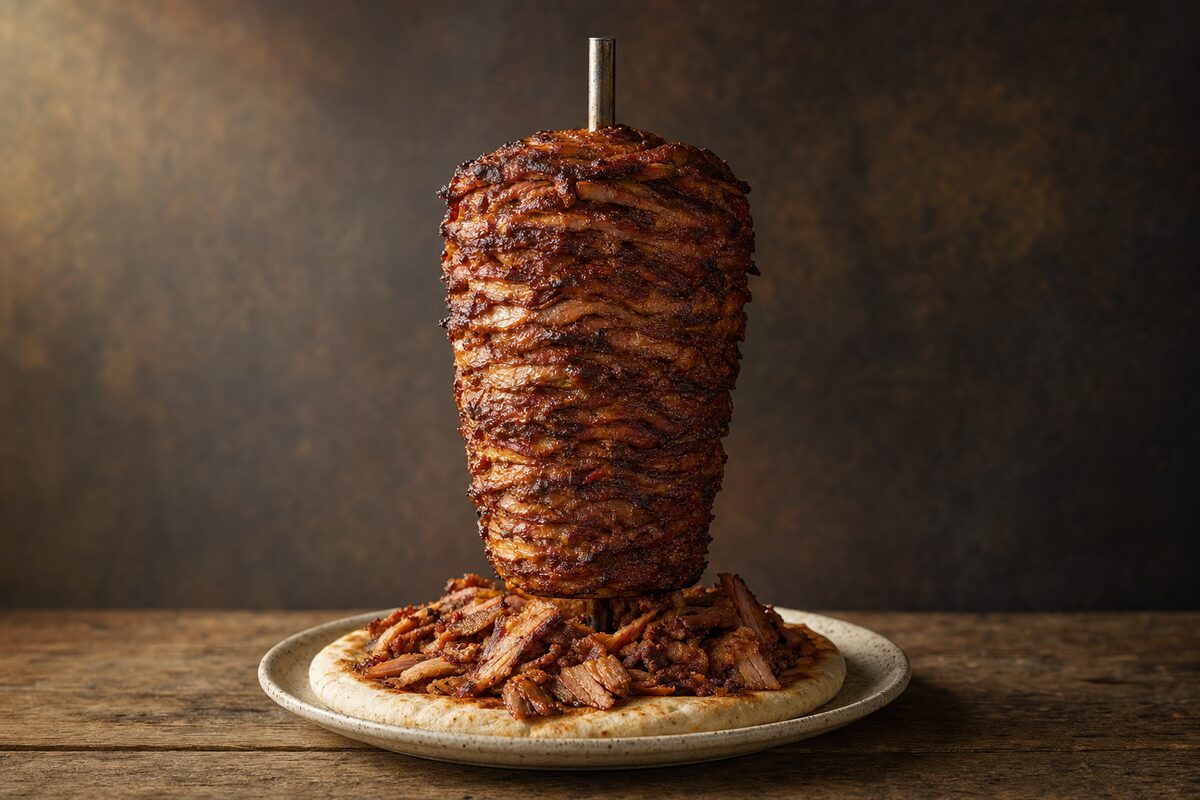
Shawarma, donair and gyro are three descendants of the same idea: meat stacked on a vertical spit and shaved off in thin slices as it turns. Shawarma is the Levantine version, the gyro is Greek, and the donair is genuinely Canadian, invented in Halifax in the early 1970s and built on seasoned ground beef with a sweet garlic sauce.
Here is what actually separates them, where each one came from, and who gets credit for the Canadian one. Worth saying plainly up front: none of these three are on the Salma’s Kitchen menu. This is a guide to a mix-up we get asked about constantly, not a list of what we sell.
What is the difference between shawarma, donair and gyro?
The meat, the sauce and the country. All three are shaved off a vertical rotisserie and wrapped in flatbread, so the silhouette is nearly identical. What changes is what goes on the spit and what gets poured over it.
| Shawarma | Donair | Gyro | |
|---|---|---|---|
| Where it is from | The Levant: Syria, Lebanon, Jordan, Palestine | Halifax, Nova Scotia | Greece |
| The name means | From Ottoman Turkish cevirme, “turning” | From Turkish doner, “turning” | From Greek gyros, “turn” |
| Usual meat | Marinated chicken, beef or lamb, layered in whole slices | Seasoned ground beef pressed into a cone | Pork or chicken in Greece, beef and lamb in North America |
| The sauce | Toum (whipped garlic) or tarator (tahini, lemon, garlic) | Sweet sauce of evaporated milk, sugar, vinegar and garlic | Tzatziki, yogurt with cucumber, garlic and often dill |
| The seasoning | Cumin, coriander, paprika, garlic, lemon | Beef seasoned with spices, no marinade in the Levantine sense | Salt, pepper, garlic, oregano |
| Typical extras | Pickled turnip, pickles, parsley, tomato, fries | Diced tomato and onion | Tomato, onion, frequently chips |
| The wrap | Pocket pita or thin markook | Thin pocket pita softened on the grill, rolled into a cone and foil wrapped | Pita rolled into a bulging pillow, or served on a plate |
The lineage runs in one direction. The Canadian Encyclopedia puts it directly: donair comes from the Greek gyro, which itself is inspired by the Turkish doner kebab, and from the 19th century onward doner spread through the Ottoman Empire into Southwest Asia, where it took on its Arabic name, shawarma.
Where did the vertical spit actually come from?
Anatolia, in the 1800s, and the switch from horizontal to vertical was probably about saving floor space rather than flavour. Roasting meat on a turning spit is ancient. Standing that spit on its end is what created this whole family of sandwiches.
National Geographic’s account of doner kebab puts the earliest images in two miniature paintings by an Istanbul artist dated between 1616 and 1620, with the phrase “doner kebap” not documented in writing until 1908. A photograph taken in the Ottoman Empire around 1853 to 1855 by the British photographer James Robertson is often called the first picture of one.
Who invented the vertical version is genuinely disputed, and it is worth saying so rather than picking a side. In Türkiye in the mid-19th century, both Hamdi Usta of Kastamonu and Iskender Efendi of Bursa claimed the method. Kebab houses in Istanbul were adopting vertical spits in the same period. This is a case where an innovation appeared in several kitchens close together in time, and the honest answer is that no single person owns it.
What happened next is easier to trace. Greek cooks turned it into gyros. Arab cooks in Syria, Lebanon, Jordan and Palestine turned it into shawarma, borrowing the Turkish word for turning to name it. And then a Greek cook in Nova Scotia turned it into something nobody had eaten before.
Who invented the donair, and why is it Canadian?
The Halifax donair is generally credited to Peter Gamoulakos, a Greek immigrant who came to Canada in 1959. In the early 1970s he took over Velos Pizza in Bedford, Nova Scotia, and found he could not get the ingredients for the Greek dishes he wanted to make.
So he improvised, and every substitution stuck. According to The Canadian Encyclopedia, Gamoulakos used seasoned ground beef where a Greek gyro would use lamb, took thin pocket pita from a Lebanese bakery and softened it on the grill, and replaced tzatziki with a sweet sauce. He also named it with the Turkish word, doner, rather than the Greek gyros.
The timeline from there is fast:
- Early 1970s. Gamoulakos starts serving the dish at Velos Pizza in Bedford.
- 1976. He opens Mr. Doner, later Mr. Donair, to specialize in it.
- 1977. By the third location the business is renamed King of Donair.
- October 1977. Leandre Bourque, one of the operators Gamoulakos brought into the business, opens Greco Donair, whose meat plant in Moncton, New Brunswick supplies other donair shops and spreads the dish nationally.
- 2015. Halifax Regional Council votes to make the donair the city’s official food. Councillors split, and Mayor Mike Savage casts the deciding vote.
- 2016 onward. National Donair Day is marked in Canada every 8 December.
CBC’s Secret Life of Canada covered how the donair became the official food of Halifax in detail. It is one of the clearest examples of a Canadian dish with a named inventor, a traceable decade and a specific city attached to it, which is rarer than you would think. Most food origin stories are contested. This one mostly is not.
What is donair sauce made of, and why is it sweet?
Evaporated milk, sugar, vinegar and garlic, whisked until it thickens into something closer to a dressing than a dip. Some shops use sweetened condensed milk instead. That is the whole trick, and it is the single element with no ancestor in Greek or Levantine cooking.
Nothing in the eastern Mediterranean pours sugar and milk over grilled meat. Yogurt, yes. Tahini, yes. Garlic, constantly. Sweetened milk, no. The sauce is the reason a donair reads as a different dish rather than a regional variation, and it is why people who grew up on shawarma often find their first donair genuinely startling.
The donair has also kept travelling. It is especially popular in Edmonton, partly because of immigration from both the Maritimes and Southwest Asia, and the western Canadian version is often served with lettuce and tzatziki, which quietly walks it back toward the gyro it came from.
What is a gyro in Greece, and is it the same one you get here?
Not quite. In Greece the default gyros is pork or chicken, not lamb. The official Athens visitor guide describes gyros as seasoned pork or chicken layered on a vertical rotisserie, turned slowly so the fat drips away, then wrapped in pita with sliced tomato, onion, tzatziki and very often chips tucked inside the wrap.
The North American gyro drifted toward a beef and lamb cone, partly because of how the meat is manufactured for restaurants here. So a Greek visitor ordering a gyro in Canada and a Canadian ordering one in Athens will both be mildly surprised. Neither is wrong. They are two branches of the same dish that grew apart.
Gyros is also not souvlaki, which is a separate thing: small pieces of meat grilled on a skewer, closer in method to the skewers we cook. Our note on how Middle Eastern skewers are grilled covers what changes when meat goes on a skewer over coals instead of onto a turning spit.
What is shawarma, and what actually goes in it?
Shawarma is the Levantine branch, and it is defined by its marinade and its sauces rather than by any single meat. The Canadian Encyclopedia’s guide to popular Lebanese dishes in Canada describes chicken shawarma marinated in cumin, coriander, paprika, garlic and lemon, stacked vertically on a metal spike and rotated for hours, then usually flashed on a griddle before it is wrapped.
What goes in the wrap depends on the meat. Chicken shawarma typically gets toum, the whipped garlic sauce, with pickles and fries. Beef shawarma leans toward tarator, a tahini, lemon, garlic and salt sauce, with parsley, tomato and pickles. Every country in the region shifts the spice blend a little, which is why shawarma in Damascus, Amman and Beirut all taste subtly different.
One cultural note that matters: in Lebanon shawarma is a snack, a quick sandwich eaten standing up. In Canada it became a late-night food. The dish did not change much. Its place in the day did.
Which one should you order?
Depends entirely on what you want the sauce to do.
- Order a shawarma if you want garlic, lemon and spice, and a wrap that tastes like the Levantine grill. It is the closest of the three to the flavours on a mezze table.
- Order a gyro if you want yogurt and oregano, something cooler and herbier, and you do not mind chips inside your sandwich.
- Order a donair if you want the Canadian one, and you should try it at least once for the same reason you should try poutine. It is a real regional invention with a real history, not a knockoff.
If you have never eaten any of them, the shawarma is the most useful starting point, because it puts you inside the flavour family that the rest of Levantine and Armenian cooking lives in. Our guide to ordering Middle Eastern food for the first time picks up from there.
So what does Salma’s Kitchen actually grill?
Skewers, not spits. We do not make shawarma, donair or gyro. Our grill runs kabab, shish tawook, toshka and sujuk, each available as a sandwich or as a full meal with fragrant rice, salad and your choice of hummus, baba ganoush or muhammara, plus our signature kibbe.
If you are trying to decide between the two grilled sandwiches people order most, shish tawook or kabab walks through that choice. Otherwise, have a look at the full menu or call (819) 743-5953 to order for pickup here in Abbotsford.
Frequently asked questions
Is a donair the same as a shawarma?
No. They share an ancestor in the Turkish doner kebab, but the donair was created in Halifax in the early 1970s and uses seasoned ground beef with a sweet sauce made from evaporated milk, sugar, vinegar and garlic. Shawarma is the Levantine version, usually marinated whole cuts of chicken, beef or lamb with garlic toum or tahini sauce.
Who invented the donair?
The Halifax donair is generally credited to Peter Gamoulakos, a Greek immigrant who came to Canada in 1959 and took over Velos Pizza in Bedford, Nova Scotia in the early 1970s. He could not source what he needed for a Greek gyro, so he switched to ground beef, thin pocket pita and a sweet sauce. Halifax named the donair its official food in 2015.
What is the difference between a gyro and a shawarma?
Mostly the seasoning, the sauce and the meat. A gyro in Greece is usually pork or chicken, wrapped in pita with tomato, onion, tzatziki and often chips. Shawarma is Levantine, spiced with cumin, coriander, paprika, garlic and lemon, and dressed with toum, tahini sauce and pickles rather than yogurt.
What is donair sauce made of?
Evaporated milk, sugar, vinegar and garlic, whisked until it thickens. Some places use sweetened condensed milk instead. That sweet and garlicky combination is the single thing that separates a Halifax donair from every other spit-roasted meat sandwich in the world.
Are shawarma, donair or gyro on the menu at Salma's Kitchen?
No. None of the three are on our menu. We grill kabab, shish tawook, toshka and sujuk on skewers over fire, and our signature is kibbe. This post is a guide to telling three commonly confused dishes apart, not a list of what we sell.
Where does the name doner kebab come from?
From the Turkish word for turning, which describes meat rotating on a vertical spit. Gyros comes from the Greek word for turn, and shawarma is an Arabic borrowing of the Ottoman Turkish cevirme, which also means turning. Three languages, three words, one idea.
Salma’s Kitchen cooks Armenian and Middle Eastern food in Abbotsford, BC. See the menu, our catering service areas, or how to order. Phone only: (819) 743-5953.