Journal
How Do You Transport Catered Food Safely?
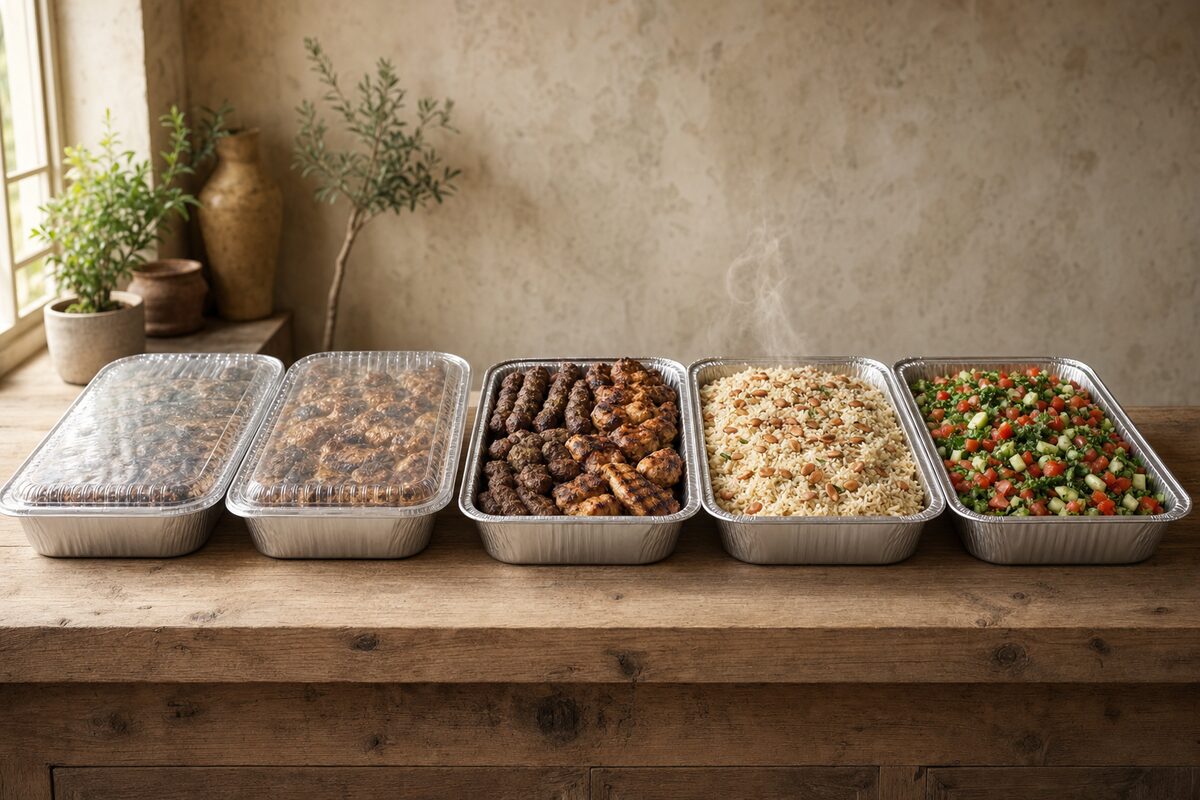
Pick the food up as close to serving time as you can, and if there is a gap, hold it properly rather than hoping. Health Canada allows two hours total at room temperature and one hour on hot days, and Fraser Health counts the drive inside that. Hot food wants an insulated container, cold food wants a cooler at 4°C or below.
This guide covers how early is too early, what the clock actually counts, how to handle the car, and what to do in the first five minutes after you arrive at a hall, a park or an office.
How early can you pick catered food up before an event?
The honest answer is that it depends entirely on whether you can hold the food properly, not on how long the food has been made. Without real hot or cold holding, your whole budget is two hours from the moment the food leaves temperature control. With it, a longer gap is workable.
Here is the rule the timing comes from. Health Canada’s leftovers guidance says to throw away any cooked food left out at room temperature for more than two hours, and to keep food out of the danger zone between 4°C (40°F) and 60°C (140°F). Its summer guidance cuts that to one hour on hot summer days. The US Food and Drug Administration puts a number on “hot” in its outdoor food safety guidance, where the limit drops from two hours to one above 90°F, which is 32°C.
British Columbia’s own standard is written into food premises rules. BCCDC’s guideline on holding food at ambient temperatures quotes the BC Food Premises Regulation directly: “Every operator of food premises must ensure that potentially hazardous food is stored or displayed at a temperature of not more than 4°C or not less than 60°C.” Those two numbers are the whole of it. Between them, you are on a clock. Outside them, you are not.
So the practical answer for a Fraser Valley event: if you are collecting food and driving it somewhere, plan the pickup as close to serving as the kitchen and your schedule allow, and ask about your specific order when you book. If you genuinely have chafing dishes and coolers waiting at the other end, you have more room, and our guide to drop off catering versus full service walks through which arrangement suits which event.
What exactly does the two hour clock count?
Everything outside temperature control, including the parts nobody counts. Fraser Health’s potluck food safety bulletin is unusually specific: throw out cold perishable foods held at room temperature for more than two hours, and “this includes the preparation time, travel time to get to the potluck and time on the meal table”.
Read that again with a real afternoon in mind. Twenty minutes loading the car in Abbotsford, thirty five minutes to a hall in Langley, fifteen minutes carrying trays in and finding the tables, then an hour of people arriving before anyone eats. That is two hours gone before the first plate, and the food has not been sitting on a buffet at all yet.
The way out of that arithmetic is not to drive faster. It is to keep the food above 60°C or below 4°C for as much of the journey as possible, because those minutes do not count against you. Health Canada makes the same point from the other direction: harmful bacteria can grow in as little as two hours in the danger zone.
How do you keep hot food hot on the way there?
Insulate it, fill it and leave it shut. Fraser Health’s transport advice is one line long: transport hot perishable foods using an insulated container. The detail that makes it work is that insulation slows heat loss rather than adding heat, so the food has to go in hot and the container has to stay closed.
A few things that genuinely change the outcome. Fill the space, because air cools faster than food, and a half empty carrier loses heat much faster than a full one. Pack hot dishes together rather than spreading them out. Keep lids sealed for the whole drive, since Fraser Health advises packing perishable foods just before you leave and not opening the containers until you are ready to serve. And keep the carrier level and stable, because a tipped tray of rice is its own kind of emergency.
Once you arrive, hot food that will be served hot should be held at 60°C (140°F) or higher. If anything needs bringing back up to temperature, Fraser Health’s instruction is to reheat perishable foods that will be served hot to at least 74°C (165°F) within two hours, which matches the 74°C Health Canada gives for leftovers in its cooking temperatures chart.
How do you keep cold food cold on the way there?
A cooler with ice packs, at or below 4°C inside, kept out of the sun. Health Canada’s barbecue and outdoor guidance is specific: keep the cooler cold with ice packs, keep it out of direct sunlight, and avoid opening it too often, because that lets cold air out and warm air in.
Two details from the same guidance are worth stealing. Use two coolers where you can, one for drinks and one for food, since the drinks cooler gets opened constantly and the food cooler then stays shut. And make sure melting ice water does not come into contact with stored meat, which Health Canada names as a cross contamination route people rarely think about.
For a Middle Eastern spread this matters more than it might for other cuisines, because so much of the table is cold by design. Dips, salads and pickles are not side dishes here, they are half the meal, as our guide to what mezze is and how to order it explains. That means the cooler is doing as much work as the hot carrier, and it deserves as much planning.
How should you pack the car, and what does each journey need?
Cold at the bottom and out of the sun, hot together and sealed, and nothing balanced on anything. This table matches the length of the trip to what you actually need for each half of the spread.
| Time from pickup to serving | Hot dishes need | Cold dishes need | What Health Canada and Fraser Health say |
|---|---|---|---|
| Under 30 minutes, mild day | Insulated carrier, lids closed | Cooler or insulated bag | Well inside the two hour allowance |
| 30 to 90 minutes | Full insulated carrier, packed tight | Cooler with ice packs, kept shut | Still within two hours, with little margin left for the table |
| Over 2 hours at room temperature | Not acceptable without hot holding | Not acceptable without a cold cooler | Health Canada: discard food left out more than two hours |
| Any journey on a hot summer day | Hot holding at 60°C or higher | Cooler at or below 4°C, in shade | Health Canada: one hour maximum at room temperature on hot days |
| Serving more than 2 hours after pickup | Chafing dishes or a hot box holding 60°C | Cooler, replenished in small batches | BC Food Premises Regulation: not more than 4°C or not less than 60°C |
The packing order that follows from all that:
- Load the cooler last and unload it first. The less time it spends in a warm car, the better it holds.
- Put raw or leaking items at the bottom. Health Canada advises keeping raw meat at the bottom of the cooler so juices cannot drip onto other foods.
- Keep hot and cold in separate vehicles or separate corners. A hot carrier next to a cooler works against both.
- Run the air conditioning and keep everything out of direct sun. Health Canada names direct sunlight specifically.
- Do not open anything on the way. Every check costs you heat or cold.
- Bring a digital food thermometer. It is the only way to know whether 60°C or 4°C is actually being held, and it settles arguments at the other end.
What do you do in the first five minutes after you arrive?
Get everything back under temperature control before you do anything else, including greeting people. The trays are on their clock from the moment they left, and the first five minutes are the cheapest place to buy time back.
Cold dishes go straight into the cooler or onto ice, not onto a table to wait. Hot dishes go into chafing dishes or stay in the insulated carrier until service. Fraser Health’s line is to pack perishable foods just before leaving and not to open the containers until you are ready to serve the food, and that applies at the destination as much as at the start.
Then check, rather than assume. A probe in the thickest part of a hot dish tells you whether you are at 60°C or drifting toward the danger zone. A probe in a cold dish tells you whether the cooler did its job. If something needs reheating, the target is 74°C (165°F), reached within two hours per Fraser Health, and gravies, soups and sauces should be brought to a full rolling boil instead.
Finally, decide how you are going to serve. Putting out half the food and refilling from the cooler keeps each tray’s clock short, which is the single most effective thing you can do at a long event. Our guide to keeping food hot and cold at an outdoor event goes into that in more detail, and how much Middle Eastern food you need per person covers how much to hold back.
What should you ask before pickup day?
Ask about your order, not about food in general, because the answer changes with the dish, the quantity and the day. A kitchen that cooks for events is used to these questions and will give you a straight answer.
- What will be hot and what will be cold when I collect it?
- How long before serving do you recommend I collect it for my event?
- Is there anything here that needs reheating before it goes out, and to what?
- Is there anything that should not be held hot, and should travel cold instead?
- What is best eaten first, and what will hold longest on the table?
- Is anything here better collected the day of rather than the day before?
Every event is a different set of distances, halls and start times, and the plan should be built around yours rather than around a generic rule. Have a look at the menu and the distances we drive to each city, from Abbotsford out to Maple Ridge, then call us at (819) 743-5953 with your date, your venue and your guest count, and we will talk the timing through with you.
Frequently asked questions
How far in advance can catered food be picked up before an event?
As close to serving as you can manage, unless you can genuinely hold it hot above 60°C or cold below 4°C. Health Canada allows two hours total at room temperature, one hour on hot summer days, and Fraser Health counts travel time inside that two hours. With real hot or cold holding, a longer gap is workable, and the kitchen is the right place to ask about your specific order.
Does the two hour rule include the drive?
Yes. Fraser Health states that the limit on perishable food at room temperature includes the preparation time, the travel time to get to the event and the time on the meal table. Many people count only the minutes since the lids came off, which is how a spread runs out of time before anyone sits down.
How do you keep food hot in a car?
Use an insulated container, as Fraser Health advises, pack it full and keep it closed. Air space and open lids are what lose heat. Once you arrive, food meant to be served hot should be held at 60°C (140°F) or higher, and anything reheated should reach 74°C (165°F) within two hours.
How cold does a cooler need to be?
The temperature inside the cooler should be at or below 4°C (40°F), according to Health Canada. Use ice packs or blocks of ice, keep the cooler out of direct sunlight, and avoid opening it, since every opening lets cold air out and warm air in. Health Canada suggests a separate cooler for drinks for exactly that reason.
Is the trunk or the back seat better for transporting food?
Whichever is cooler and out of direct sun. Health Canada's advice is to keep the cooler out of direct sunlight and to avoid opening it often. On a warm day a car interior with the air conditioning running is usually kinder to a cooler than a closed trunk, and a hot box wants to be somewhere it will not tip.
What should you ask the caterer before pickup day?
Ask what will be hot and what will be cold when you collect it, how long they expect it to hold, whether anything needs reheating before service, and how soon before your event they recommend collecting. Ask about your specific order rather than the food type in general, because the answer depends on the dish.
Salma’s Kitchen cooks Armenian and Middle Eastern food in Abbotsford, BC. See the menu, our catering service areas, or how to order. Phone only: (819) 743-5953.