Journal
Where Do You Buy Middle Eastern Ingredients in Abbotsford?
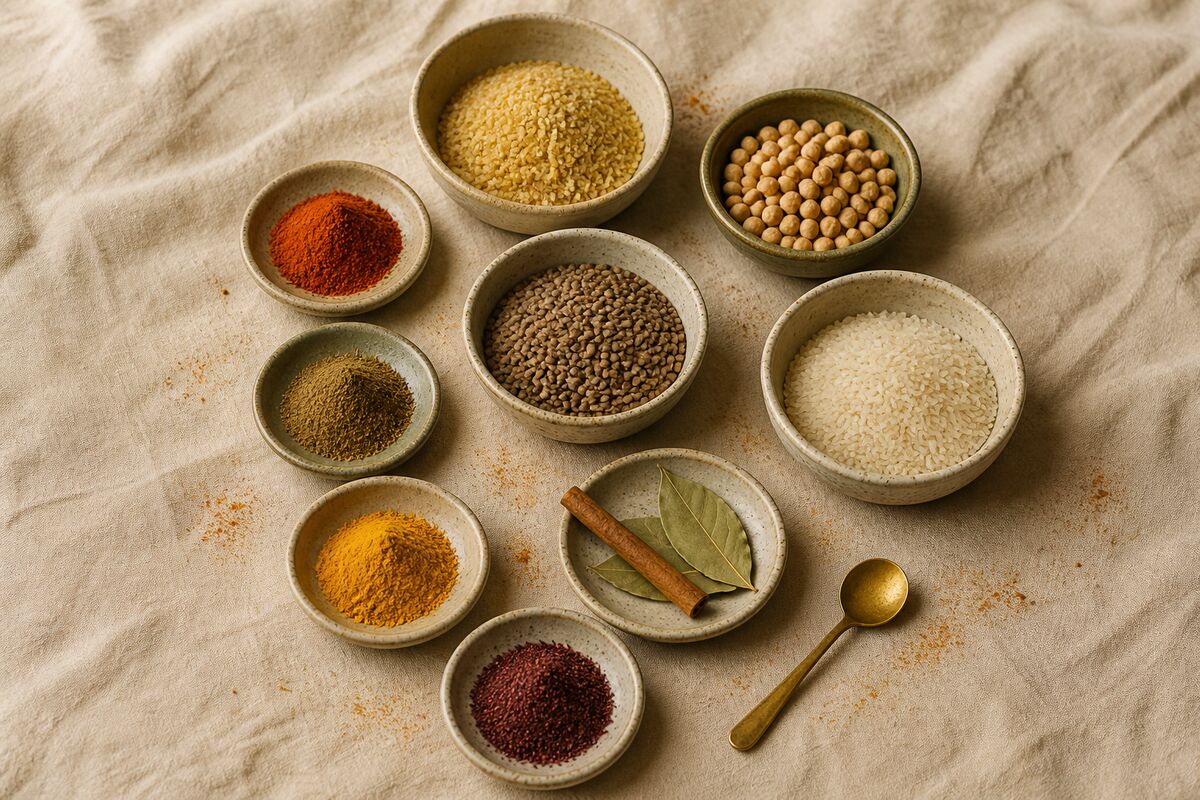
Most Middle Eastern cooking runs on eleven pantry items, and nine of them keep for months. Tahini, chickpeas, bulgur wheat, olive oil, lemons, garlic, cumin, paprika, sumac, pomegranate molasses and fresh parsley will get you through the majority of the recipes you will want to try. All of them can be found in the Fraser Valley.
This is a guide to sourcing them here in Abbotsford and the surrounding communities, what each one actually does, and which things are genuinely worth making at home rather than ordering already made.
What do you actually need to stock?
Less than you think. Middle Eastern home cooking is not an equipment or ingredient arms race, it is a small pantry used constantly.
- Tahini. Ground sesame paste, the base of hummus and baba ganoush. Buy a jar that separates and needs stirring, which is a sign it has not been stabilised into a paste that never tastes of sesame.
- Chickpeas. Dried if you have the patience, canned if you do not. Dried chickpeas make noticeably better hummus.
- Bulgur wheat. Parboiled, dried, cracked wheat. The backbone of tabouli and of the kibbe family. Fine grind for salads, coarse for pilafs.
- Olive oil. Used as a finishing ingredient, not just a cooking fat.
- Lemons and garlic. Bought weekly, used daily. Bottled lemon juice is a false economy here.
- Cumin and paprika. The two spices doing the most work on the grill.
- Sumac. Dried crushed berries, deep red, sour and slightly fruity. Sprinkled on salads, rice, eggs and grilled meat.
- Pomegranate molasses. Boiled down pomegranate juice, thick and sour sweet.
- Flat leaf parsley and mint. In genuinely large quantities. Tabouli is a herb dish with a little grain in it, not the other way around.
- Long grain rice. The plate under most of it.
Note how much of that list is plants. Canada’s food guide asks people to choose protein foods that come from plants every day and names beans, lentils, nuts and seeds among the protein foods worth eating more of. A Middle Eastern pantry is built that way already, which is why it is a forgiving cuisine to cook and a generous one to serve.
Where do people shop for these in the Fraser Valley?
In four different kinds of places, and most home cooks end up using all four. The good news is that the search has got much shorter over the past decade.
- Large supermarkets in Abbotsford, Langley, Mission and Chilliwack. The international aisle now reliably carries tahini, sumac, canned chickpeas, pomegranate molasses and often bulgur. Selection is narrow but it is close to home.
- South Asian, Persian and Mediterranean grocers across Abbotsford and Surrey. Wider range, better turnover on spices, and the staff know what you are cooking. Sumac and za’atar bought here are usually fresher, which matters more with ground spices than with anything else.
- Bulk food stores. The easiest source for bulgur, red and green lentils, dried chickpeas, walnuts and rice, in whatever quantity you actually want.
- Farm stands and farmers markets. For the parsley, tomatoes, cucumbers, eggplant and peppers that a mezze table runs on. Roughly 72% of Abbotsford’s land area sits inside British Columbia’s Agricultural Land Reserve according to the City of Abbotsford, so this is a good place to buy vegetables in season. It is also why we buy from Fraser Valley farms whenever we can.
For halal meat specifically, dedicated butcher counters operate across Abbotsford, Surrey and Langley, and some large supermarkets carry certified packaged product. Canada’s labelling rules require that any halal claim is accompanied by the name of the body that certified the food, so look for the certifier’s name rather than the word on its own. We wrote a fuller guide to what halal means when you order food in the Fraser Valley.
What is worth making at home, and what is worth buying ready made?
Some of this cooking rewards effort enormously and some of it just takes your evening. Here is an honest split, from people who make all of it every day.
| Item | Effort at home | Worth making yourself? |
|---|---|---|
| Tabouli | Low, but a lot of parsley chopping | Yes, it is at its best within the hour |
| Armenian salad | Low | Yes, this is a knife skills dish and nothing more |
| Hummus | Medium, soaking and peeling chickpeas | Once, to understand it, then decide |
| Baba ganoush | Medium, eggplant must be properly charred | Yes if you have a gas flame or a grill |
| Muhammara | Medium, roasting and balancing the molasses | Yes, and it is the most rewarding to get right |
| Kibbe | High, the shell is a genuine skill | This is the one to leave to a kitchen |
| Grilled kabab | Medium, but needs real heat | Yes in summer, on a hot grill |
| Sujuk | Very high, it is a cured sausage | No, buy it made |
| Fragrant rice | Low | Yes, always |
The pattern is easy to read. Salads and dips reward a home cook immediately. Anything cured, stuffed or shaped by hand, kibbe above all, took somebody years to learn and will take you a while too.
What should you buy first if you are starting from nothing?
Buy three things and cook one dish. That is a better start than a full shelf of jars you use once.
Start with tahini, a can of chickpeas and a lemon, and make hummus. It takes fifteen minutes with canned chickpeas and it teaches you the ratio that underpins half the cuisine: sesame, acid, garlic, salt, water. Once that tastes right to you, add sumac and pomegranate molasses, which are the two ingredients that will make people ask what you did differently.
One allergy note worth having early. Tahini is ground sesame, and sesame seeds are on Health Canada’s list of priority allergens, the substances most frequently linked to serious allergic reactions in Canada. If you are cooking for guests, say what is in the dips rather than waiting to be asked.
How do you store all of this?
Sensibly, and mostly not in the fridge. The pantry is durable, which is the whole reason it evolved this way.
- Tahini: cupboard before opening, fridge after, and stir it back together before use. Cold tahini seizes, so let it sit out for a few minutes.
- Bulgur, lentils, dried chickpeas: airtight jars in a dark cupboard, good for a year or more.
- Sumac, za’atar, ground cumin and paprika: buy small, replace often. Ground spice loses its point after about six months and sumac loses its colour first.
- Pomegranate molasses: cupboard, and it will outlast your interest in it.
- Parsley and mint: stems in a glass of water in the fridge, loosely covered. They will last the better part of a week that way and about a day if you do not.
What if you do not want to build a pantry at all?
Then skip it, and let someone else do the soaking. Not everybody wants a cupboard of specialist ingredients for the two or three times a year they cook this food, and there is nothing precious about admitting it.
We make hummus, baba ganoush and muhammara from scratch and pack them by the half kilo for pickup in Abbotsford, which covers most of what a home cook would attempt on a weeknight. Add the salads and a couple of grilled plates and you have a full table without owning a single jar of anything. If you have never ordered this food before, our first timer’s guide to ordering walks through where to start.
Have a look at the menu, then call (819) 743-5953. Half kilo dips travel well, keep for a few days, and turn whatever else you were going to cook into something better.
Frequently asked questions
What ingredients do you need to cook Middle Eastern food at home?
A short pantry does most of it: tahini, dried or canned chickpeas, bulgur wheat, good olive oil, lemons, garlic, cumin, paprika, sumac and pomegranate molasses. Add flat leaf parsley and mint fresh, plus a bag of long grain rice. Nine of those eleven items keep for months, which is why the pantry is worth building once.
Where do you find tahini and sumac in the Fraser Valley?
Larger supermarkets in Abbotsford, Langley and Chilliwack now stock tahini and sumac in the international aisle, and South Asian, Persian and Mediterranean grocers across Abbotsford and Surrey carry a wider range at better turnover. Bulk food stores are usually the easiest source for bulgur, lentils and chickpeas.
What is bulgur wheat, and can you substitute it?
Bulgur is wheat that has been parboiled, dried and cracked, so it cooks quickly and keeps a chew. It is the backbone of tabouli and of the kibbe family. Couscous is not a substitute, since it is a pasta rather than a cracked grain, and quinoa changes the texture completely.
What is pomegranate molasses used for?
It is boiled down pomegranate juice, thick and dark, sour with a sweet edge. It goes into muhammara, gets brushed onto grilled meats, dresses salads and lifts a stew. One bottle lasts a long time and it does something no other ingredient in a Canadian kitchen does.
Is it better to make hummus at home or order it made?
Make it once, then decide. Hummus from dried chickpeas is genuinely better than most tubs, and it takes soaking, cooking, peeling and blending, so it is an afternoon rather than a weeknight. We make ours from scratch and pack it by the half kilo for pickup in Abbotsford, which is the shortcut for people who want the long version without doing the long version.
Where do you buy halal meat in the Fraser Valley?
Dedicated halal butcher counters operate in Abbotsford, Surrey and Langley, and several large supermarkets carry certified halal packaged meat. Canadian labelling rules require that a halal claim names the body that certified the food, so check for that name rather than the word alone.
Salma’s Kitchen cooks Armenian and Middle Eastern food in Abbotsford, BC. See the menu, our catering service areas, or how to order. Phone only: (819) 743-5953.